How the Masters Program Supports Strong Bones and a Life Well Lived
Oct 01, 2026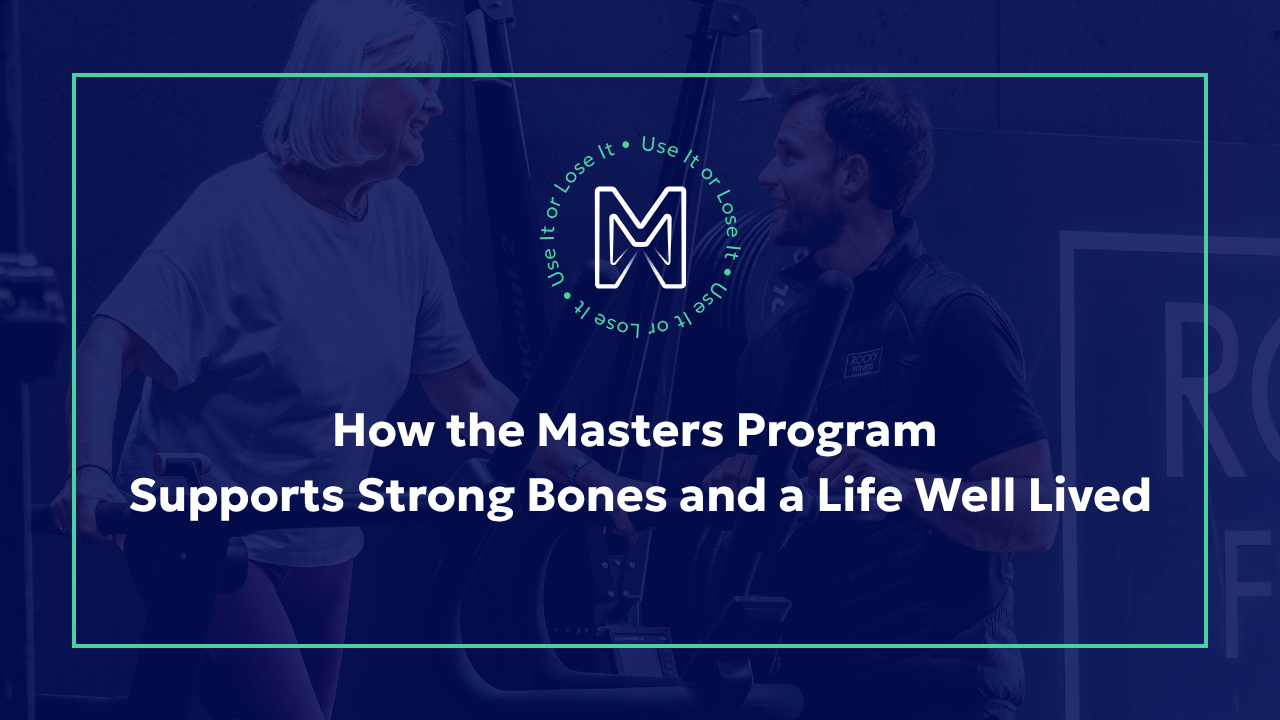
Exercise is one of the most effective tools we have for protecting bone density, but not all exercise is equally safe or effective for every bone, especially once density has already started to decline. The Masters Program combines the right kind of loading with physiotherapist supervision, so members build stronger bones and greater confidence, without having to guess at what is safe for their particular body.
By now, if you have been reading along this month, you will know that bones respond to being asked to work, much like muscles do. What we have not yet talked about is quite how much the details matter, and why the way that loading is delivered can make such a difference to both safety and results.
Why Does the Type of Exercise Matter So Much for Bone Health?
Bone responds best to loading that is specific, progressive, and pitched correctly for the individual. Too little, and nothing much changes. Too much, too soon, particularly for someone whose bone density has already declined, and the very exercise meant to help can instead carry a real risk of injury. Generic advice to simply do some weight-bearing exercise is a perfectly good starting point, but it cannot tell you how much load is right for your own bones, your own joints, and your own history, which is exactly the gap physiotherapist-led sessions are built to close.
What Does a Physio-Led Approach Add That a Generic Class Doesn't?
A physiotherapist begins with your actual history, any previous fractures, joint replacements, arthritis, or other conditions, rather than a one-size-fits-all starting point. From there, progression is adjusted in real time, watching your form, your confidence, and how your body is responding, rather than following a fixed script regardless of how you are getting on. For someone managing osteopenia or osteoporosis specifically, this individual attention is not a luxury add-on, it is the difference between exercise that protects your bones and exercise that could inadvertently put them at risk.
Beyond Bone Density, What Difference Does This Make to Everyday Life?
Stronger bones matter for their own sake, but the difference members tell us about most often is a quieter one, the return of confidence. Being able to kneel down in the garden without a second thought, carry a suitcase through an airport, or get down on the floor to play with a grandchild and know you can get back up again easily. That confidence, once it starts to erode, tends to shrink a person's world in small ways they may not even notice happening. Building it back is very much what this work is really about.
What Can I Expect From a Masters Program Session Aimed at Bone Health?
Sessions begin with an individual check-in, so your physiotherapist knows exactly where you are that week, followed by progressive weight-bearing and resistance work pitched to your own bone health and joint history, all within a small group setting that keeps things social and enjoyable rather than clinical. Safety monitoring runs quietly throughout, so you can focus on the movement itself rather than second-guessing whether it is right for you. If bone health is something you would like taken seriously, properly and personally, we would love to have you join us for a taster session.
Frequently Asked Questions
Do I need a bone density scan before joining?
No, a scan is not a requirement to join, though if you already have one it helps your physiotherapist tailor your sessions more precisely from day one.
What if I already have osteoporosis, can I still take part?
Yes, and many of our members do. Sessions are adapted around your specific diagnosis and history, with loading pitched appropriately for your bone density rather than a generic programme.
Will the exercises be too advanced for a complete beginner?
Not at all. Everyone starts from wherever they currently are, and progression happens gradually and individually, so complete beginners are very much welcome.
How is this different from a general gym class?
A general class typically follows one set programme for everyone in the room. Here, a physiotherapist adjusts loading and progression to your specific bone health, joints, and history, watching and adapting session to session.
How quickly might I notice a difference?
Many members notice improved confidence in everyday movement within a matter of weeks, while changes to bone density itself take longer, typically measured over months rather than weeks.
What if I have other conditions alongside low bone density, like arthritis or a joint replacement?
That is very much the norm rather than the exception among our members, and it is exactly the kind of complexity a physiotherapist-led approach is designed to work around safely.