Concerned about Osteopenia? Discover How to Protect Your Bones, Stay Strong and even Reverse Your Diagnosis!
Download our free guide to Osteopenia
Learn the essential steps you can take today to prevent further bone loss and build strength
What Is Osteopenia?
Osteopenia is the health condition / disease which arrises as a result of a decrease in Bone Mineral Density (BMD) and Bone Mass. Osteopenia is often called the “silent condition”. Most people do not realise they have it until after a fall or fracture.
Osteopenia does not occur overnight, it is a slow process. As we age our bone loses some of its thickness and density, this is a normal part of ageing. We usually achieve Peak Bone Density (the highest your BMD will ever be) in our late teens and early 20s. From then on our bone will slowly lose its strength and density. For females this rate of loss is accelerated after menopause. Osteopenia is often considered a precursor to osteoporosis or early stage osteoporosis.
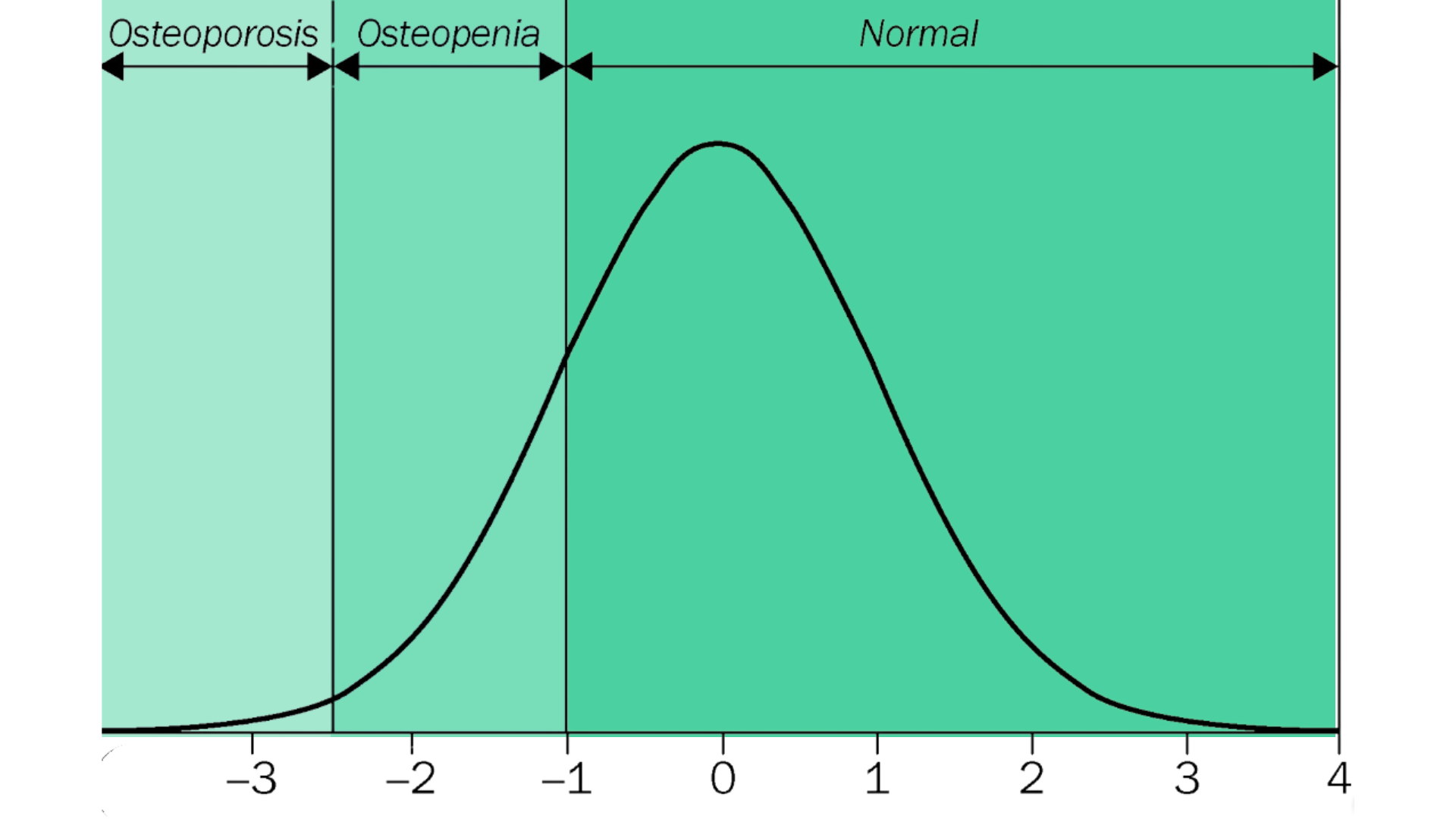
If left untreated / unchallenged, osteopenia can progress into osteoporosis. Osteopenia and Osteoporosis can be suspected following a fracture or by looking at lifestyle factors and can then be diagnosed / confirmed via a DEXA scan. A DEXA scan will provide you with a T-score which compares your BMD to an average or expected BMD for your age and weight. A T-score of -1 to -2.5 is considered Osteopenia and a score below -2.5 is considered Osteoporosis.
It is estimated that 300,000 people in Ireland are living with Osteoporosis. Early detection and prevention are the key to managing Osteopenia and preventing Osteporosis, and that is how Physiotherapy can help.
The right exercise and early intervention can protect your bones and prevent Osteoporosis.
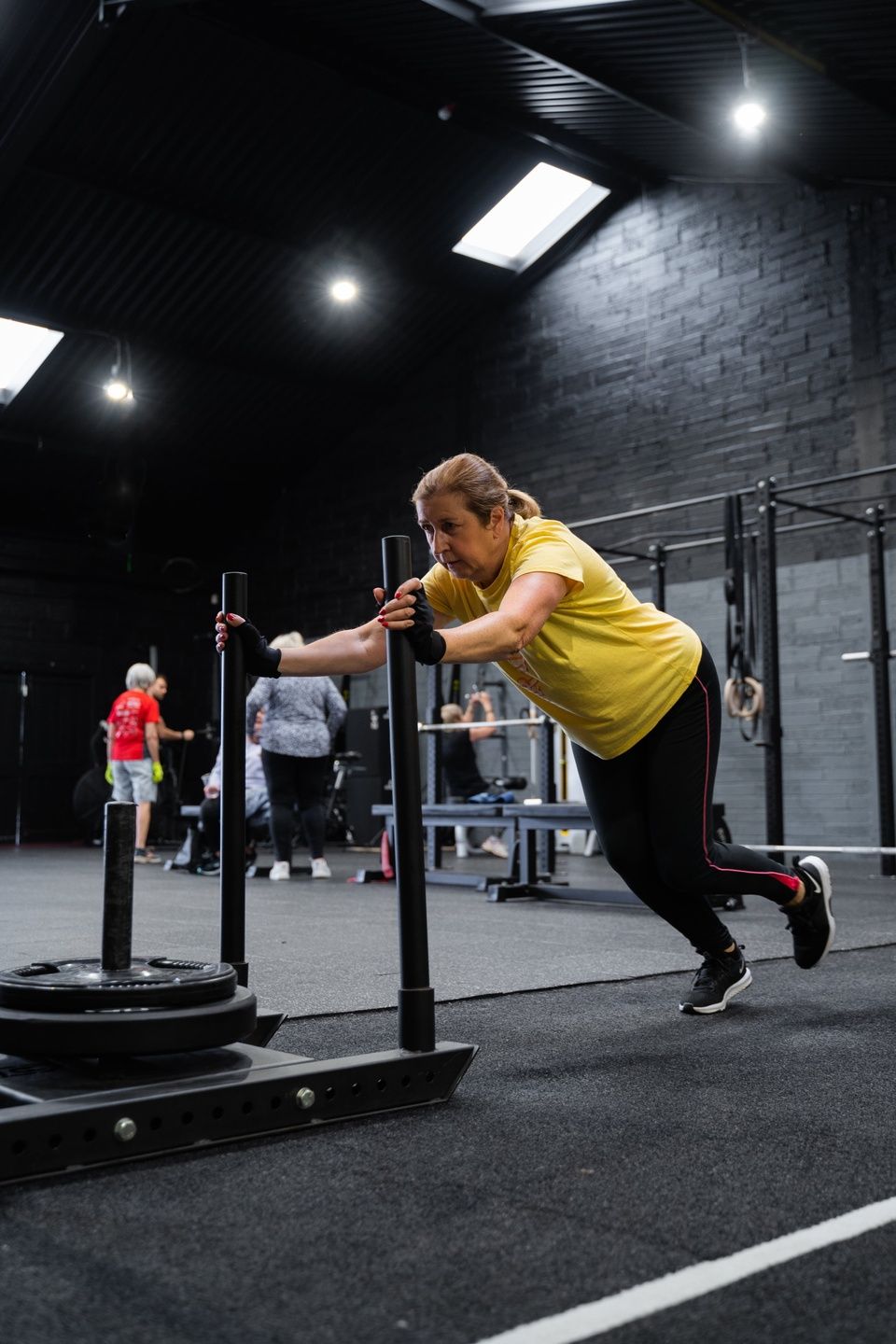
Weight Bearing Exercise is the #1 type of exercise for Osteopenia. Only when we use our bones and load them do they maintain and build more bone, not when we rest. Resistance training is the easiest and safest form of weight bearing exercise.
Whilst aerobic exercise such as walking, cycling and swimming are great for our heart and lungs, they do not particularly challenge our bones or our muscles. Resistance training is vital in the treatment and prevention of Osteopenia.
Deadlifts, Squats, Step Ups, Farmers Carries, Push Ups, Overhead Presses - these are just some of the many exercises which can help challenge our bone and our muscle. Impact activities such as tennis, running, skipping, weightlifting, can also help us to strengthen our bones and prevent.
When it comes to finding the right weight for these exercises the key is to start small and build. The first most important thing is to have good technique. Then to slowly increase your weights or your reps each week / month once you are happy that your body is handling the new exercises. There are no 'quick fixes' when it comes to Osteopenia or Osteoporosis, we are aiming to engage in lifelong exercise, therefore you do not need to increase the intensity too quickly.

Our Members DEXA Improvements
We have had some fantastic DEXA scan improvements to date among our Masters Program members.
Many members have improved from Osteoporosis to Osteopenia and many more have improved from Osteopenia to Normal Bone.
Some members did this without any medication - purely through lifestyle and diet change, combined with regular, supervised resistance training.
Others did it with a combination of medication, nutrition and resistance training.
No member has disimproved their DEXA to date, which in itself, is a massively positive results of our Masters Program.
We are determined to gather more results into the future and publish these fantastic findings.
Many people believe that they cannot improve their DEXA scores, that Osteopenia and Osteoporosis is a condition for life and that it will only get worse. Many of our members are very fearful and worried about their diagnosis when they first find out. They are unsure what to do and who to listen to.
We are very experienced in this area and take time to speak with each new members about their bone health before joining the Masters Program. We advise a holistic plan which includes linking with a dietician for diet and supplement management and with their GP for an necessary medical management.
Our Masters Program more than covers the most important part of their management: Weight Bearing Exercise.
Our Results to Date
The Masters Program was founded in June 2021 and has grown significantly since then. We have met and helped 100's of older adults to get FITTER and not FRAILER.
If we could go back in time and change one thing, it would be to have gathered more pre and post DEXA scan results from our members because we have some of the best results in the world.
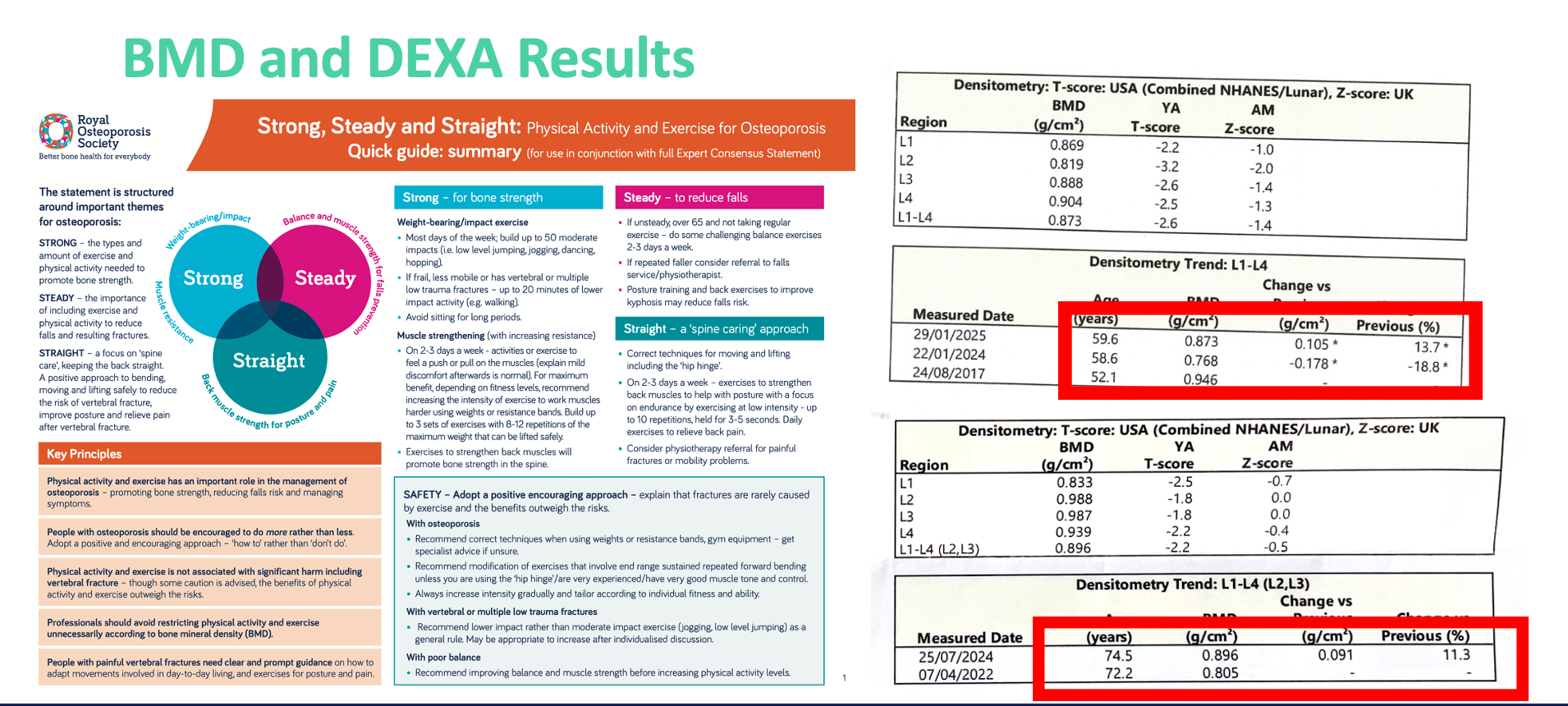
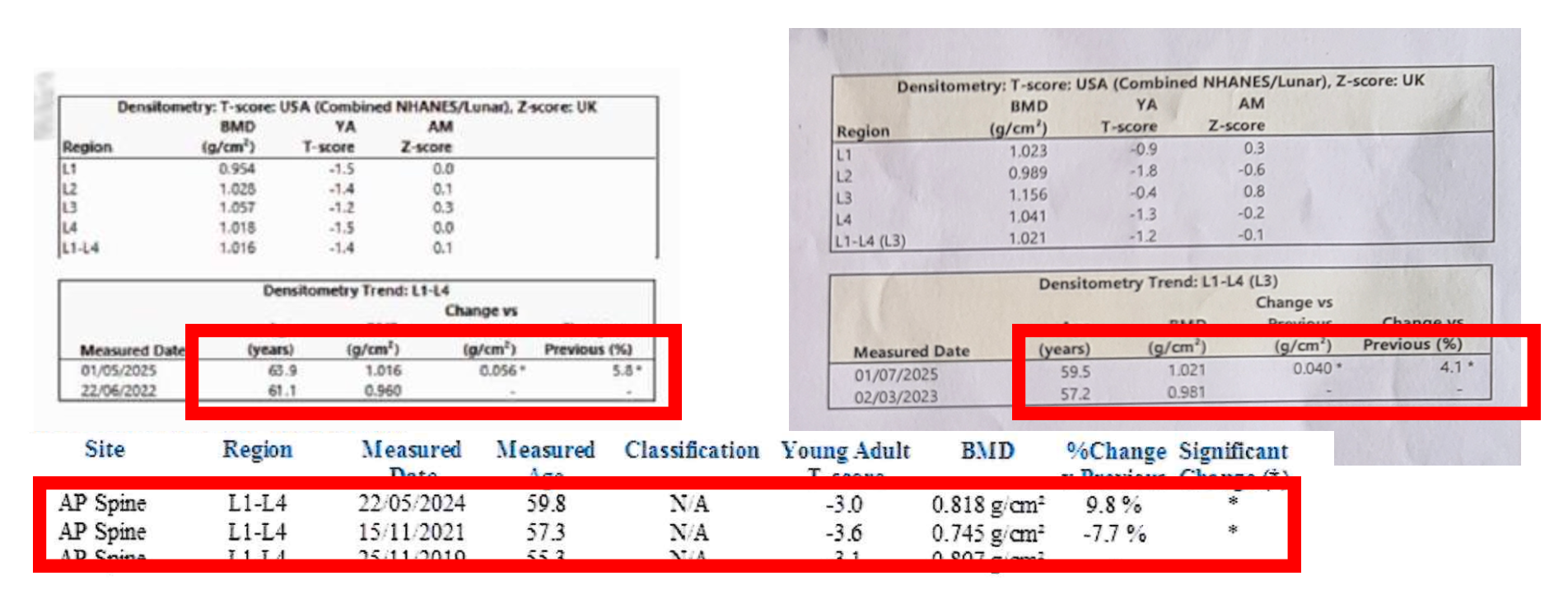
From the relatively small amount of members who have sent us on their DEXA scan results before joining the Masters Program and their next scan after being active members - we have seen phenomenal improvements.
Members have moved from osteoporosis to osteopenia and from osteopenia to normal bone.
In fact, no member has yet disimproved on DEXA.
We have attached some of our members fantastics results below - and a copy of the Royal Osteoporosis Society's Expert Consensus Statement on Physical Activity and Exercise for Osteoporosis - Strong, Steady and Straight.
Download our free guide to Osteopenia
Learn the essential steps you can take today to prevent further bone loss and build strength